Inducted:
2026
Category:
Musical Influence
One of the best selling Latin artists of all time, Celia Cruz’s powerful music was the sound of freedom post-Cuban Revolution, shaping and popularizing the Afro-Cuban genre.
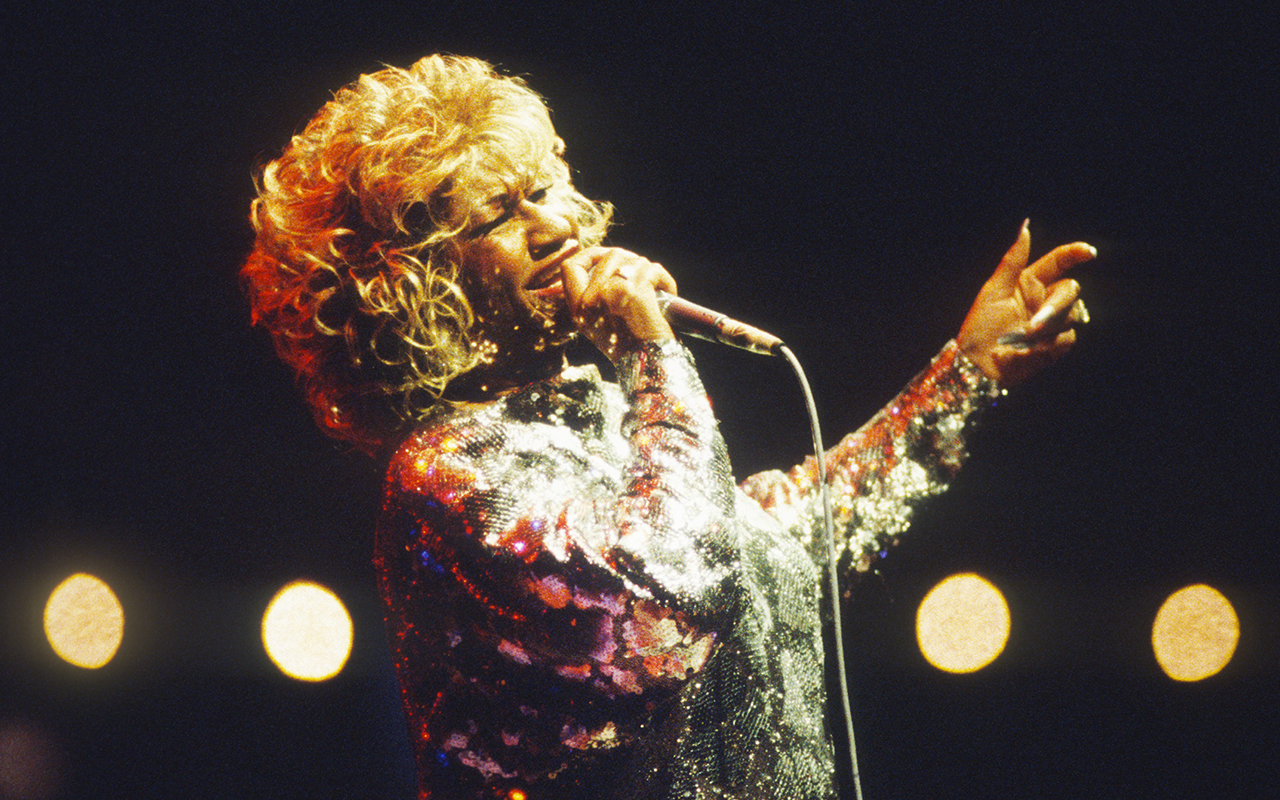
Celia Cruz pioneered Latin pop for the twentieth century and beyond with her contributions to Afro-Cuban guaracha style as well as the creation and popularization of salsa. Through her powerful sound and vibrant image, Cruz was the voice of love and freedom post-Cuban Revolution and during the U.S. Civil Rights Movement. Cruz sold over thirty million records worldwide, making her one of the best-selling Latin artists to date. With staples like “Quimbara,” “La Vida es un Carnaval,” and “La Negra Tiene Tumbao,” Cruz reigns as the undisputed Queen of Salsa.
Born Celia Caridad Cruz Alfonso in Havana, Cuba, Cruz was one of fourteen children and found her voice through singing lullabies to her younger siblings. She began performing at cabarets as a teenager, despite singing careers being heavily discouraged in the community. Defiantly, she continued to pursue music, singing in radio contests until she got her break with the band Sonora Matancera and remaining their lead singer for fifteen years.
After Castro seized power of Cuba in 1959, Cruz immigrated to the U.S. and embarked on a solo career. In 1966, she was handpicked by Tito Puentes to perform with his orchestra and collaborated with him on four albums. However, it wasn’t until Cruz’s collaboration with Johnny Pacheco of Fania Records that she achieved true commercial success. The 1974 album Celia & Johnny and its lead single “Quimbara” propelled Cruz into the mainstream, laying the groundwork for nearly three decades of increasingly dynamic releases and tours.
After her death in 2003, Cruz was awarded the Grammy for Best Salsa/Merengue Album for the posthumous release Regalo del Alma. Cruz won a total of three Grammy awards – as well as four Latin Grammys – and, most notably, was awarded the Recording Academy’s Lifetime Achievement Award in 2016. Cruz’s legacy was cemented in history through her inductions into the Billboard Latin Music Hall of Fame and International Latin Music Hall of Fame, along with the 2005 Smithsonian exhibit, titled after her famous catchphrase, ¡Azúcar!
Influence
Influences
Antonio Arcaño
Abelardo Barroso
Arsenio Rodriguez
Celia Cruz
Influenced
Sheila E.
Gloria Estefan
Jennifer Lopez
More from
the Hall